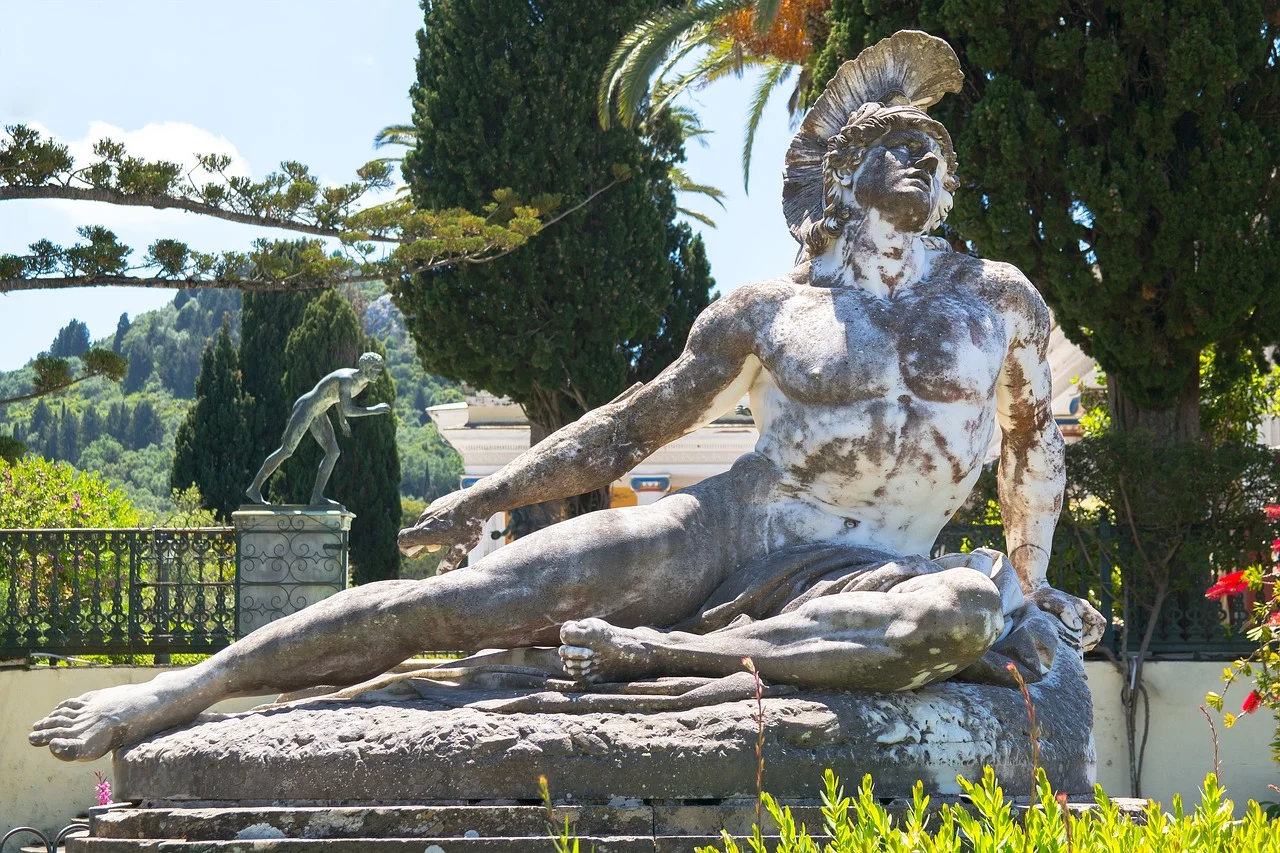
A mild Mediterranean climate, around 300 days of sunshine a year, and breathtaking natural beauty: Corfu is undoubtedly one of the most popular gems among the Greek islands. But Corfu has long since ceased to be just a sought-after destination for summer vacations. More and more people—whether they’re self-employed and working from home, expats, families, or retirees—are choosing Corfu as their permanent home or second home.
Anyone considering emigrating to Greece or purchasing a vacation home will find ideal conditions on Corfu. From the excellent quality of life and relaxed lifestyle to the straightforward real estate purchase process for EU citizens, the island offers an outstanding combination of tradition and modern living.
Why Corfu Is So Popular as a Place to Live
Corfu differs from other islands in the Aegean in many ways. When people think of Greece, they usually picture barren rocky landscapes, dazzling white houses, and blue domed roofs. Corfu, on the other hand, surprises visitors with lush, green vegetation, expansive olive groves, and architecture strongly influenced by centuries of Venetian rule.
The Benefits of Living in Corfu at a Glance
- High quality of life: The warm hospitality of the islanders, the relaxed lifestyle, and a growing international community make settling in particularly easy.
- Excellent accessibility: Corfu International Airport offers numerous direct flights to Germany, especially during the summer months. The island also has excellent year-round connections to the Greek mainland and Italy via the ferry port in Igoumenitsa.
- Good Infrastructure: As the central hub of the Ionian Islands, Corfu offers reliable medical care with a central hospital, a wide variety of shopping options, and a diverse range of cultural and culinary experiences.
- Diverse real estate market: Options range from traditional stone houses in quiet mountain villages to stylish apartments in the historic old town of Corfu Town (Kerkyra) to luxurious villas right on the coast with stunning ocean views.
Regions on Corfu: Where’s the best place to live?
The island offers a variety of regions to suit different lifestyles:
1. Corfu Town (Kerkyra) and the surrounding area
Those who appreciate urban charm, historic alleyways, and easy access to culture, restaurants, and shops will feel right at home in the island’s capital. Corfu Town is bustling year-round and offers an active city life even during the winter months.
2. The North: Picturesque and Green
Northern Corfu captivates with its rolling landscapes, stunning bays, and charming fishing villages like Kassiopi and Sidari. This region is particularly popular with buyers seeking tranquility or looking to purchase a vacation home to rent out.
3. The South: Flat Sandy Beaches and Tranquility
The south is flatter and boasts kilometers of sandy beaches, such as Agios Georgios South. Here, life is often more unspoiled and laid-back.
Buying Real Estate on Corfu: What German Buyers Need to Know
For citizens of the European Union, purchasing property in Greece is a fairly straightforward process, as EU citizens are largely treated the same as Greek citizens under the law. Nevertheless, there are important steps that should be taken into account beforehand.
The Most Important Steps in the Purchase Process
- Apply for a Greek tax ID number (AFM): A personal tax ID number (AFM – Arithmo Forologikou Mitroou) is required for all legal transactions, the purchase agreement, and the subsequent handling of taxes in Greece. This can be applied for at the tax office or conveniently through an authorized representative.
- Legal review by an attorney: Before the actual contract is signed, an attorney reviews the land registry. This ensures that the property is free of encumbrances, mortgages, or ownership disputes and that all building permits are in order.
- Notarization and Land Registry Entry: Once all documents have been thoroughly reviewed, the purchase contract is executed before a notary and subsequently entered into the local land registry. Only upon this entry does the buyer legally become the owner.
Keep an Eye on Additional Purchase Costs
In addition to the purchase price itself, buyers should budget for additional costs totaling approximately 5 to 7 percent. These consist of the following:
- Real estate transfer tax: approx. 3.09% of the purchase price or assessed value
- Notary and land registry fees: approx. 2% and 0.5%, respectively
- Attorney and real estate agent fees: as agreed (real estate agent commission is typically 2 to 4%)
Important Legal and Tax Considerations
Anyone who emigrates to Corfu or spends more than 183 days a year there becomes liable for taxes in Greece. Thanks to the double taxation treaty (DTA) between Germany and Greece, double taxation of income is avoided. However, it is advisable to consult a tax advisor before permanently relocating to clarify all details regarding tax exemptions and the taxation of pensions or rental income.
Travel & Connections to Corfu
Corfu benefits from its geographic location in northwestern Greece, making it easily accessible from Central Europe—whether by air, land, or sea.
1. Flight Connections (Air)
Corfu International Airport (Ioannis Kapodistrias – CFU) is extremely centrally located, just about 3 kilometers south of Corfu Town.
- Summer season (April/May through October):
- Direct flights: Numerous airlines offer direct flights several times a day from almost all major German, Austrian, and Swiss airports (e.g., Frankfurt, Munich, Berlin, Düsseldorf, Vienna, Zurich).
- Flight duration: From Germany, the flight time is approximately 2 to 2.5 hours.
- Winter season (November through March):
- During the winter months, flights to Corfu are mainly via connecting flights. The most common route is with Aegean Airlines or Olympic Air via Athens or Thessaloniki (several domestic flights daily).
Traveling by Car & Ferry
If you’d like to travel to Corfu with your own car, RV, or a lot of luggage, use a combination of highway and car ferry.
- Via Italy (popular route for Central Europeans):
- Route: Drive through Austria/Switzerland to Italy to the ferry ports of Venice, Ancona, Bari, or Brindisi.
- Ferry crossing: Direct ferries from Italy usually head to the port of Igoumenitsa on the Greek mainland (some ferry companies also stop directly in Corfu during the summer).
- Duration: The crossing from Ancona to Igoumenitsa takes about 16–20 hours. From Bari/Brindisi, it takes about 8–10 hours.
- From the Greek mainland to Corfu:
- Shuttle ferry: Car ferries depart hourly from the Igoumenitsa ferry port to Corfu (city) or Lefkimmi (in southern Corfu).
- Crossing time: About 1 to 1.5 hours.
3. Getting Around on the Island
- Car & Rental Car: Having your own car or renting one is highly recommended on Corfu to easily reach remote beaches, mountain villages, and supermarkets. The road network is well-developed, though in the mountains the roads can be narrow and winding in places.
- Bus Services (Public Transportation):
- Blue Buses: Serve Corfu Town as well as the surrounding area and suburbs.
- Green Buses: Connect Corfu Town with almost all major towns and beaches across the entire island.
- Ferries & Water Taxis: Regular ferry services and water taxis are available for trips to neighboring islands (such as Paxos and Antipaxos) or secluded coves.
A Place for Quality of Life and Stable Value
Life on Corfu offers an ideal blend of Mediterranean relaxation, cultural diversity, and beautiful nature. The real estate market presents an attractive option for both expats and investors looking to purchase a home in Southern Europe. With thorough preparation and attention to the legal steps involved, nothing stands in the way of your dream of living on the “Green Island.”