Energy Efficiency in Real Estate: Why It Is Crucial for Sales and Rentals
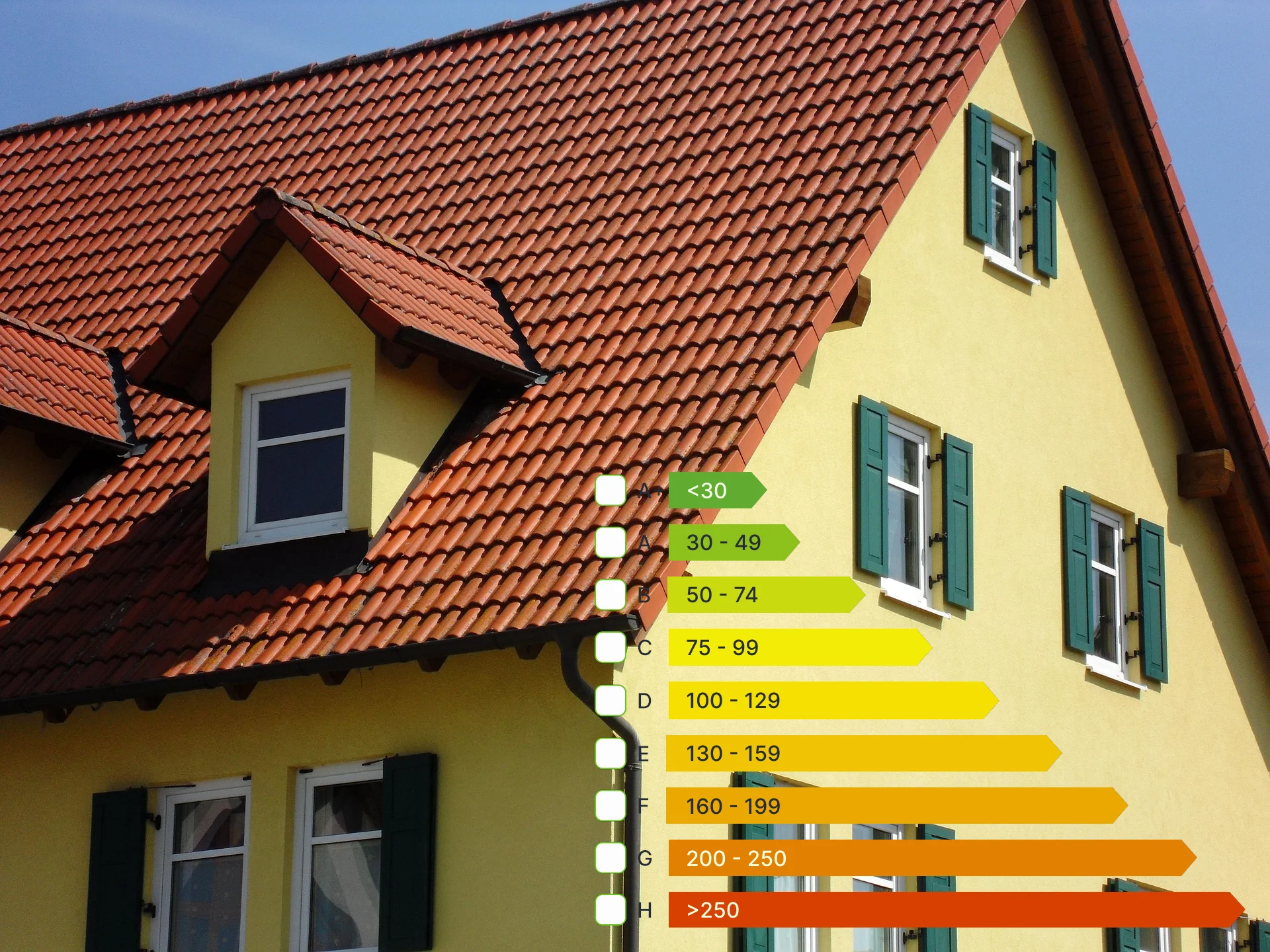
Anyone looking to sell or rent out a property today quickly realizes that the days when only location, square footage, and room layout mattered are over. One factor has quietly developed into an absolute deal-breaker in the real estate market: energy efficiency.
But why is an energy-efficient building suddenly so important for market success? And what legal obligations must owners observe? In this article, you will learn why energy efficiency is your greatest lever for a successful sale or a quick rental.
Legal Obligation: You Can't Do Without an Energy Performance Certificate
Anyone advertising, selling, or re-letting a property in Germany cannot avoid it: the Energy Performance Certificate (Energieausweis). It is legally required (under the Building Energy Act, or GEG) and must be presented to potential buyers or tenants upon request, at the latest during the viewing.
Key data must already be included in the real estate listing:
- The type of energy certificate (demand-based or consumption-based)
- The final energy demand or consumption of the building
- The energy efficiency class (from A+ to H)
- The year of construction of the building and the primary energy source (e.g., gas, heat pump, oil)
Warning - Fines: Anyone who forgets to include this information in the listing or fails to present the certificate in time risks significant penalties of up to 10,000 euros.
The Sales Factor: Higher Value and Faster Processing
The energy efficiency class of a property has a direct impact on its market value. Houses with classes A+ to C can be sold for significantly more than so-called "renovation cases" with classes F to H.
Why buyers specifically look for energy efficiency:
- Future-proofing: Buyers want to know if they will face expensive mandatory renovations (e.g., heating replacement or facade insulation) in the coming years.
- Incidental Purchase Costs & Financing: Many banks now offer more favorable "Green Loans" or interest rate discounts for the purchase of KfW-efficiency houses.
- Value Stability: An energy-efficient property is crisis-proof and retains its value even as energy prices rise.
For you as a seller, good energy efficiency means: Less room for negotiation for the buyer, a higher selling price, and faster processing.
The Rental Factor: Low Utility Costs as a Magnet
For tenants, the cold rent has long ceased to be the only criterion. Due to strongly fluctuating energy prices, the warm rent (the so-called "second rent") has moved into focus.
Advantages for landlords with high energy efficiency:
- Lower vacancy risk: Apartments with low heating costs are highly sought after on the market and can be re-let more quickly.
- Saving on CO2 tax: Since January 2023, the CO2 tax for heating costs is split between landlord and tenant—graduated according to the building's energy efficiency. The worse the building is insulated, the more the landlord has to pay out of their own pocket. In an efficiency house, the tenant bears almost all the costs.
- Satisfied tenants: A good indoor climate (no drafts, no risk of mold thanks to modern insulation) ensures long-term and satisfied tenants.
Investing in Energy Efficiency Pays Off
Whether selling or renting: The energy efficiency of a building is no longer just an "eco-topic," but a hard economic factor.
If you own an older property, it may be worth carrying out targeted energy-related modernizations (such as replacing an old heating system or insulating the top floor ceiling) before selling or re-letting. You can often easily recoup the investment costs through a higher sales or rental price.
The difference between the best class (A) and the worst class (H) is enormous. A class H building consumes on average five to eight times as much energy as a class A building.
Here is a concrete example calculation for an average single-family home with 140 m² of living space (based on average energy costs of approx. 15 to 20 cents per kWh for gas/heat):
| Energy Class | Consumption per m² / year | Total consumption (140 m²) | Estimated heating costs / year |
|---|---|---|---|
| Class A (Top standard / new build) | approx. 30 - 50 kWh | approx. 5,600 kWh | approx. 980 € |
| Class H (Unrenovated old building) | over 250 kWh | approx. 35,000 kWh | approx. 6,100 € and more |
The savings potential at a glance:
- Annual savings: Switching from H to A saves approx. 5,000 € to 5,500 € per year in pure heating and hot water costs.
- Additional savings for rentals (CO2 tax): With class H, the landlord must pay up to 95% of the state CO2 tax themselves. With class A, the tenant pays almost all of it. A renovation therefore also directly saves the owner taxes and levies.
A poor energy efficiency class (such as F, G, or H) is now one of the strongest arguments for price negotiations when buying property. Buyers specifically use the condition of the property to massively push down the asking price.
Why the energy class lowers the price:
- Calculation of renovation costs: Buyers deduct the costs for the upcoming renovation (e.g., new heating, roof insulation, window replacement) directly from the purchase price. These costs can quickly amount to 50,000 € to over 100,000 €.
- Legal obligation to renovate: Under the Building Energy Act (GEG), buyers are often legally required to carry out certain measures (such as insulating top floor ceilings or replacing old constant-temperature boilers) within two years of moving in.
- More difficult financing: Banks now check the energy certificate very carefully. For poor classes, they often demand a higher equity share or add a risk premium to the interest rate, as the risk of payment defaults due to rising energy costs is higher.
How much of a discount is realistic?
Depending on the region and market situation, energy classes F to H lead to noticeable price deductions compared to energetically renovated properties:
| Market situation / Region | Typical price discount for class F-H |
|---|---|
| A-locations (Sought-after major cities) | approx. 5% to 15% (location compensates for much, but renovated sells better) |
| B- and C-locations (Rural areas / commuter belt) | 20% to up to 35% (Here, unrenovated houses can become "shelf warmers") |
For sellers: Anyone who does not renovate before selling should set the price realistically from the start to avoid lengthy negotiations or a loss of image for the property ("shelf warmer").
For buyers: The energy certificate is the perfect guide for the viewing. In case of doubt, additionally request an energy consultant to determine the exact renovation costs and use these as a precise basis for negotiation.