The "Golden Visa" in Greece 2026: How to Secure Permanent Residency Through Real Estate
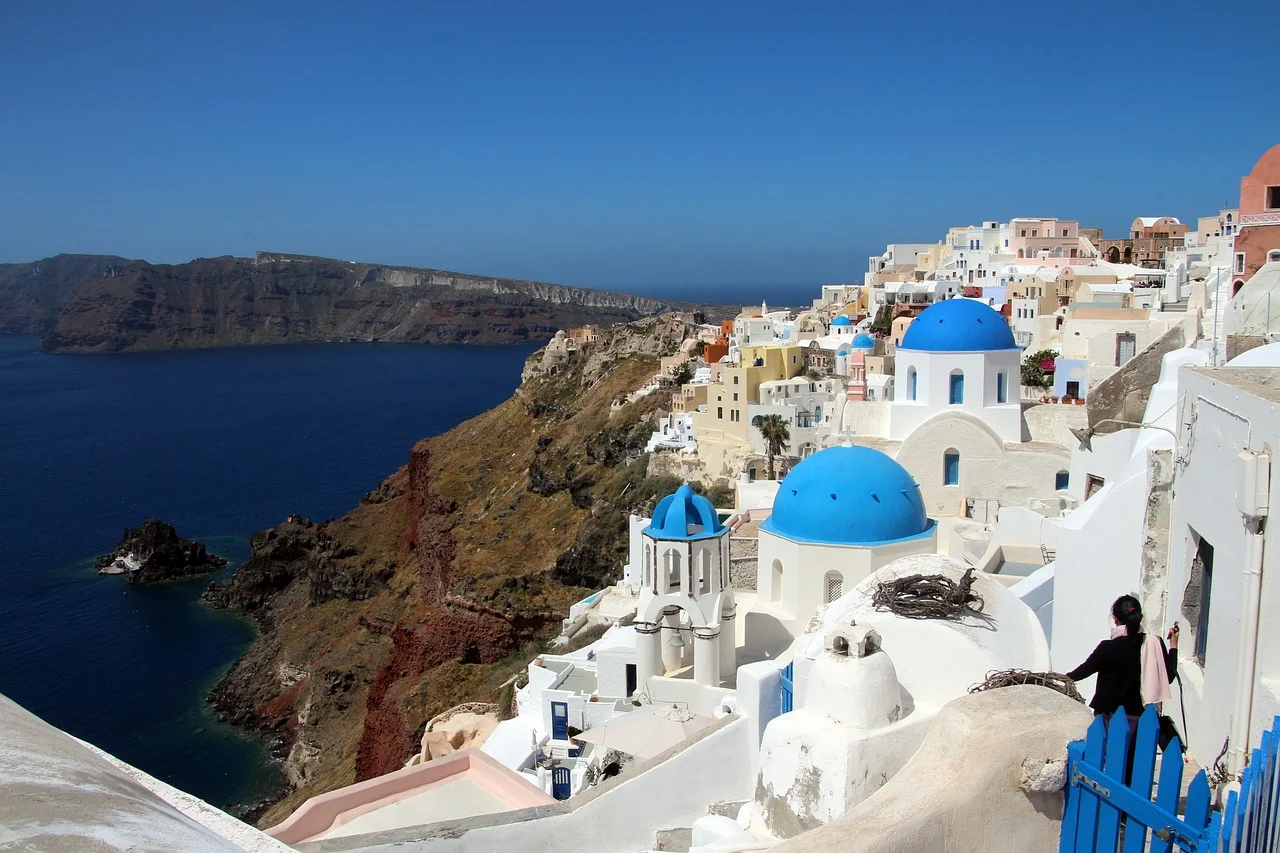
The European market for investment-based residency programs has undergone a fundamental transformation in recent years. While several EU states have completely discontinued or severely restricted their programs, the Greek "Golden Visa" (Greek: Χρυσή Βίζα) remains one of the most attractive and resilient options for high-net-worth third-country nationals (non-EU/EEA citizens). However, 2026 marks a turning point: due to sweeping legislative changes, tightened minimum investment thresholds, and new regulatory requirements, the landscape for international real estate investors has changed fundamentally. Anyone wishing to purchase property in Greece in 2026 to secure permanent residency in the European Union and free access to the Schengen Area must precisely understand the current legal framework and regional market dynamics.
This comprehensive guide examines the Greek Golden Visa program in 2026 from a holistic, professional perspective. We analyze the new investment tiers, the exact legal procedure, tax implications, benefits for families, and the strategic market regions that continue to promise excellent returns and long-term capital appreciation despite increased hurdles.
1. Strategic Background: Why the Greek Golden Visa 2026 is so Coveted
Greece combines unparalleled quality of life, a strategic geographic location at the crossroads of three continents, and a dynamically growing economy. For international investors—particularly from the USA, the Middle East, Asia, and the UK—the Golden Visa is no longer just a "Plan B scenario" or a travel document. It has become a strategic asset.
The program grants the main investor and their family the right to live and invest in Greece indefinitely and to move freely throughout the Schengen Area (up to 90 days per 180 days in other Schengen states). Unlike other programs, Greece does not require a minimum physical stay. You do not need to spend a single day per year in Greece to maintain your status as a permanent resident. This makes the program the perfect solution for global entrepreneurs and High-Net-Worth Individuals (HNWIs) who need to remain highly mobile for business and personal reasons.
2. The New Investment Thresholds in 2026: The Zoned System
To counteract the acute housing shortage and rapid rental price inflation in metropolitan areas, the Greek government has fundamentally reformed the investment model. In 2026, the system is based on strict geographic and typological segmentation. There is no longer a flat minimum investment of 250,000 euros for standard residential properties across the country.
The 800,000 Euro Zone (Premium Regions)
In the economically strongest and most popular tourist regions of the country, the minimum investment amount for residential properties has been raised to 800,000 euros. This threshold applies to:
- The entire Attica region (including Athens, Piraeus, and the entire Athenian Riviera).
- The regional units of Thessaloniki.
- Popular island groups and destinations such as Mykonos, Santorini, Paros, Rhodes, and Corfu.
- All islands with a population of more than 3,100 inhabitants.
The 400,000 Euro Zone (Mid-Market & Growth Markets)
In all other regions of the Greek mainland as well as on smaller, less densely populated islands, the minimum investment threshold for regular residential properties is 400,000 euros. This includes emerging regions in the Peloponnese, parts of Central Greece, and more rural coastal sections that are increasingly becoming the focus of investors seeking a balanced ratio between investment volume and price per square meter.
The Exceptions: The Remaining 250,000 Euro Entry Point
In 2026, there are two specific legal exceptions where investors can still obtain a Golden Visa nationwide for just 250,000 euros. However, these options require strategic skill and a deep understanding of the local market:
- Commercial-to-Residential Conversion: When an investor acquires a commercial property (e.g., an office building, warehouse, or factory building) and legally converts it into residential space. Important: The conversion must be fully completed before submitting the Golden Visa application.
- Restoration of Listed Buildings: The acquisition of a historically or architecturally protected building qualifies for the 250,000 euro threshold, provided the investor fully restores the building in accordance with strict heritage protection regulations.
3. Important Regulatory Requirements for Real Estate in 2026
In addition to the investment sums, the legislator has introduced strict qualitative and operational rules to prevent abuse and protect the local rental market. Every investor must strictly fulfill these criteria, as the application will otherwise be rejected without compromise:
- The Single-Property Rule: The minimum investment amount (whether 800,000 or 400,000 euros) must be invested in a single property. In 2026, it is no longer permitted to combine several smaller apartments worth 100,000 euros each to reach the total threshold. The only exception is co-ownership of a single, indivisible property, where each co-owner invests the full minimum amount.
- Minimum Size Requirement: The chosen property must have a closed main usable area of at least 120 square meters. Balconies, terraces, parking spaces, and basement storage rooms are not included in this calculation.
- The Strict Ban on Short-Term Rentals (Airbnb Ban): This is the most drastic change for yield-seekers. Properties acquired through the Golden Visa program may absolutely no longer be rented out short-term to tourists via digital platforms such as Airbnb, Booking.com, or VRBO. Non-compliance leads to the immediate revocation of the residence permit and a severe fine of 50,000 euros. Long-term rentals for residential purposes, however, are permitted without restriction and are tax-efficient.
- Prohibition of Use as a Registered Office: The property may not be used as the registered headquarters or secondary office of a commercial company.
4. Step-by-Step Process: From Investment to Residence Permit
The legal and administrative procedure for obtaining the Golden Visa is highly formalized. Since all transactions must be transparently processed through the Greek banking system, working with specialized lawyers and notaries is essential. The typical process in 2026 is divided into the following phases:
Step 1: Property Selection and Due Diligence
After identifying a suitable property, an appointed Greek lawyer conducts a comprehensive legal audit (due diligence) at the competent Land Registry (Hypothekofylakeio) or Cadastral Office (Ktimatologio). This verifies that the property is free of encumbrances, mortgages, liens, or building code violations.
Step 2: Application for a Greek Tax Number (AFM) and Account Opening
Every foreign investor requires a Greek tax number (Arithmos Forologikou Mitrou - AFM). At the same time, an account is opened at a Greek commercial bank. Although payments can now be made directly from foreign accounts under strict conditions, a local account significantly simplifies the entire process and the subsequent management of the property.
Step 3: Conclusion of the Purchase Agreement and Payment
The purchase agreement must be drawn up and notarized by a Greek notary. The entire purchase price, including all ancillary costs, must be paid via bank transfer, irrevocable bank check, or through a secure transaction account. Cash payments or payments via crypto-assets are strictly prohibited for the Golden Visa. The contract must explicitly contain the clause that the transaction complies with the requirements of Article 20B of the Immigration Law.
Step 4: Land Registry Registration
The notary forwards the signed contract to the competent Land Registry. Only upon issuance of the registration certificate (Metagrafi) is the investor the legal owner and meets the requirements for the visa application.
Step 5: Submission of the Golden Visa Application
The application is submitted digitally via the Ministry of Migration and Asylum platform. Immediately after submission, the investor receives an electronic confirmation, the so-called "Blue Slip" (Veveosi). This document is official proof of the pending application and entitles the investor and their family to legally enter and reside in Greece.
Step 6: Biometric Data Collection and Permit Issuance
Within six months of submitting the application, the main investor and all family members must travel to Greece in person to provide their biometric data (fingerprints and photographs) at the competent immigration authority. After successful verification, the physical Golden Visa card is issued, which is valid for five years and can be renewed indefinitely every five years as long as the investor retains ownership of the property.
5. Cost and Tax Analysis for the Investor
A professional business plan for a real estate investment in Greece requires a precise calculation of purchase costs and ongoing tax obligations. Buyers should expect ancillary costs in the range of approximately 7% to 10% of the property value.
One-time Purchase Costs
- Transfer Tax: In Greece, this is a uniform and moderate 3.09% of the contractual or government-determined minimum value ("Objective Value"), whichever is higher.
- Notary Fees: Generally, notary fees range between 1.0% and 1.5% plus statutory VAT.
- Legal Fees: For legal due diligence, contract drafting, and representation before the authorities, law firms typically charge between 1.0% and 2.0% of the purchase price.
- Land Registry Fees: Registration in the land registry costs approximately 0.5% to 0.8%.
- Brokerage Commission: The market standard is 2.0% of the purchase price paid by the buyer (plus VAT).
Ongoing Taxes and Levies
Owners of real estate in Greece are subject to the annual property tax known as ENFIA. This is calculated based on a complex system considering the location, year of construction, area, and luxury features of the property. For a standard 120-square-meter apartment, ENFIA typically ranges between 300 and 1,500 euros per year.
If the property is rented out long-term, rental income is subject to the progressive income tax for real estate in Greece:
- Income up to 12,000 euros: 15% tax rate
- Income from 12,001 to 35,000 euros: 35% tax rate
- Income over 35,000 euros: 45% tax rate
Greece has also concluded double taxation agreements (DTA) with numerous countries to ensure fair tax treatment for international investors.
6. Family Inclusion: Who Benefits from the Golden Visa?
One of the greatest advantages of the Greek program is its strong family-friendliness. The main investor does not have to apply in isolation but can include direct relatives in the visa under the concept of "family reunification" without additional investments. The following persons receive the same permanent residency status:
- The spouse or partner with whom a registered partnership agreement has been concluded in Greece.
- Joint biological or adopted children under 21 years of age. This status can be extended for children until they reach the age of 24.
- The parents of the main investor (parents-in-law of the spouse).
- The spouse's own parents.
Thus, a single investment of, for example, 400,000 euros protects up to three generations of a family and enables them to live and study freely in the European Union. The Greek education system offers excellent private international schools and universities that primarily teach in English, French, or German and offer degrees that are recognized worldwide.
7. The Path to Greek Citizenship (EU Passport)
The Golden Visa is a permanent residence permit but does not automatically lead to citizenship. For high-net-worth investors who aspire to the full status of an EU citizen, including a Greek passport, in the long term, the law offers a clear, albeit demanding, path. The requirements for this are:
- Physical Residency: The investor must have lived legally and continuously in Greece for at least 7 years. Unlike obtaining the Golden Visa, where there is no residency requirement, naturalization requires a real center of life in Greece (at least 183 days of physical presence per year).
- Tax Residency: The applicant must have had their tax domicile in Greece during these 7 years and properly declared their global or local income.
- Integration and Language: Proof of solid Greek language skills (level B1) as well as sound knowledge of the country's history, geography, and culture is mandatory. A standardized naturalization test must be successfully completed for this purpose.
Upon receiving the Greek passport, the investor benefits from full freedom of establishment and work in all 27 EU member states, as well as visa-free travel to over 180 countries worldwide.
8. Market Analysis 2026: Where is Investment Worthwhile Now?
The increase in thresholds has strongly segmented the market but offers highly interesting opportunities for strategically acting investors. Instead of chasing rising prices in overheated centers, capital flows in 2026 are shifting to smart niche markets:
Athenian Riviera & Piraeus (The 800,000 Euro Challenge)
Those with the necessary capital will find absolute luxury properties on the Athenian Riviera (Glyfada, Voula, Vouliagmeni) as well as in the vicinity of the monumental infrastructure project "The Ellinikon" (Europe's largest urban renewal project). Despite the 800,000 euro hurdle, demand for high-end apartments remains unbroken. Piraeus is also developing into an urban hotspot for long-term capital appreciation due to massive investments in the port and metro connection.
Chania & Heraklion (Crete - The Undiscovered Growth Engine)
Since Crete is one of the regions in 2026 where the 400,000 euro threshold applies (provided the population of the specific municipality is below the critical mark or it concerns more rural parts), Greece's largest island offers a phenomenal price-performance ratio. Crete benefits from an extremely long tourism season, excellent medical care, and the construction of the new international airport in Kastelli, which will give property values a massive boost in the coming years.
The Peloponnese (Coast on the Rise)
Regions around Messenia (near Costa Navarino) and Nafplio offer breathtaking coastal landscapes and first-class villa architecture within the 400,000 euro zone. The connection to Kalamata airport makes this region extremely attractive for European and international buyers who want to combine peace, nature, and an upscale lifestyle.
The Commercial Conversion Model (The 250,000 Euro Opportunity)
More and more institutional developers are buying up old, vacant office buildings or textile factories in the historic center of Athens (e.g., around Omonia Square or in the Psiri district). They are gut-renovating them and converting them into modern, stylish residential lofts. Investors can purchase these finished converted units as a package, secure the Golden Visa for the historically low amount of 250,000 euros, and benefit from attractive annual rental yields in the range of 4% to 6% from high-net-worth long-term tenants (expats, digital nomads).
9. Risk Management and Due Diligence for Foreign Buyers
Buying real estate abroad always carries specific risks, especially when linked to an immigration program. To avoid serious mistakes, transaction-experienced investors must adhere to the following maxims:
- Never rely blindly on developer information: Always hire a completely independent lawyer who represents only your interests and has no business ties to the seller or broker.
- Rely on experienced civil engineers: In addition to the legal audit, the technical and structural inspection of the property is essential. In Greece, all buildings must be built to be absolutely earthquake-proof and comply with current European energy efficiency classes (keyword: energy performance certificate).
- Check completion guarantees for off-plan properties: If you are purchasing a property that is still under construction, the notary contract must include strict deadlines, penalty payments for delays, and bank guarantees from the developer. In such cases, the purchase price is released strictly according to construction progress.
10. Conclusion: The Verdict on the Greek Golden Visa in 2026
In 2026, the Greek Golden Visa has transformed from a cheap mass-market product into an exclusive, quality-oriented premium residency program. The increase in thresholds to 800,000 euros in top locations and the ban on Airbnb rentals have largely pushed speculative short-term capital out of the market. What remains is a highly stable, highly attractive investment environment for serious, high-net-worth investors seeking real intrinsic value.
Those who act strategically, utilize exceptions such as commercial conversion for 250,000 euros, or invest specifically in emerging 400,000-euro regions, secure not only an invaluable piece of quality of life and security in one of the most beautiful countries on earth but also a future-proof asset with excellent prospects for sustainable value growth and reliable rental yields in the heart of the European Union.