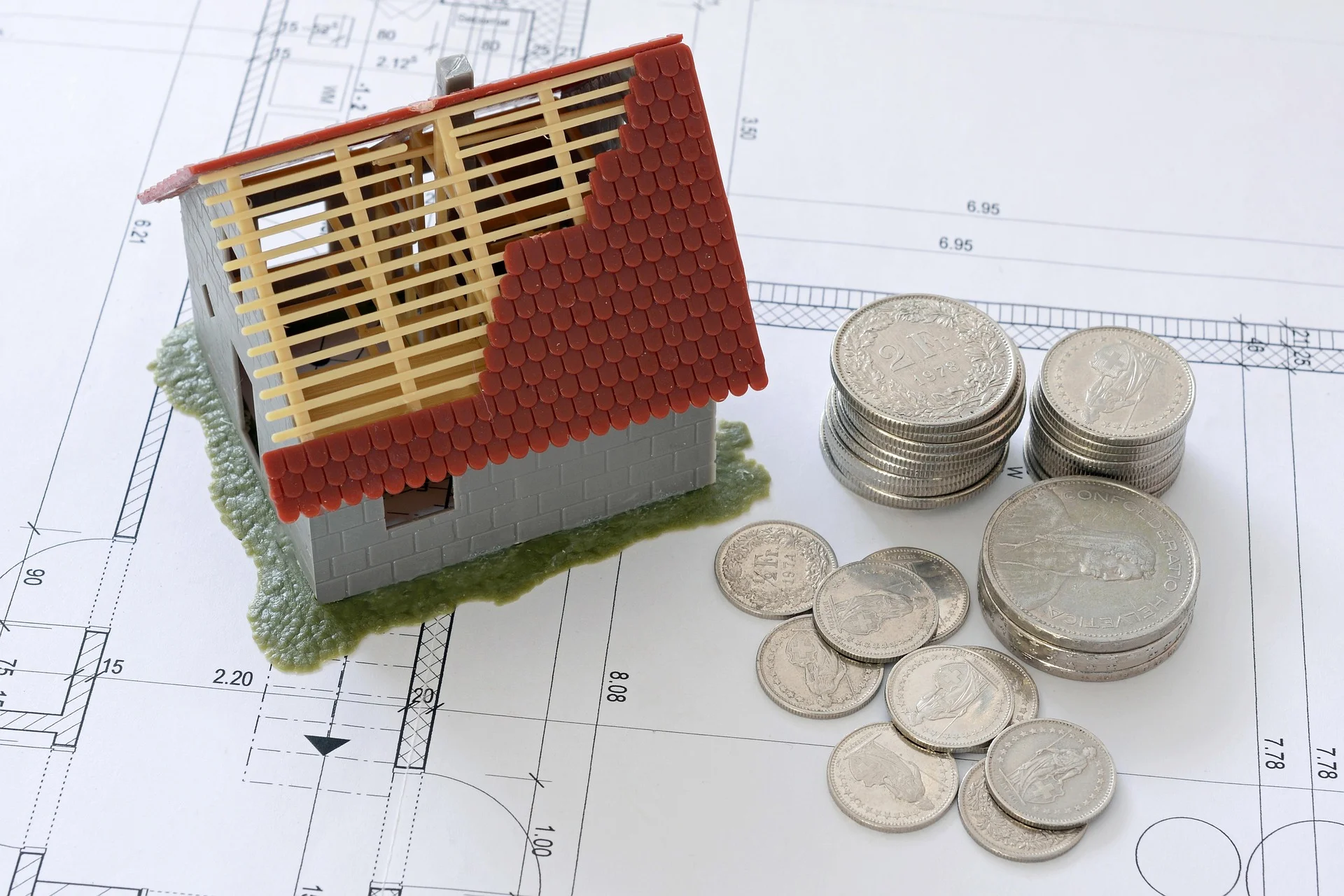
The path to your own property: When is the ideal time?
The question of the perfect time to buy a property is crucial for your long-term financial success. While a favorable market environment is helpful, your personal situation plays the most important role.
Do not let yourself be pressured solely by external factors such as interest rate fluctuations or incidental costs. It is often wiser to wait until your private circumstances are stable. Check the following checklist in advance:
- Intention to buy: Are you sure you want to settle down in one place for the long term?
- Equity: Do you have sufficient savings?
- Monthly burden: How high can the installment be so that your standard of living is maintained?
Why creditworthiness is the deciding factor in real estate financing
Creditworthiness is a reflection of your financial reliability. It signals to the bank how secure the repayment of the loan is. Excellent creditworthiness is the ticket to top conditions and low interest rates.
For this purpose, banks primarily evaluate:
- Income situation: The amount and security of your salary.
- Payment history: Punctuality with previous loans or invoices.
- SCHUFA information: Your score value based on previous financial behavior.
Buying a house without equity: Risk or opportunity?
So-called full financing (100% financing) sounds tempting because it enables an immediate purchase. However, it is only advisable under certain conditions:
- Prerequisite: A very high, crisis-proof income to cushion unforeseen costs.
- The risk: Without equity, interest rates are usually significantly higher. In addition, there is a risk of rapid over-indebtedness in the event of loss of income.
How much equity is really necessary?
Equity forms the foundation of your financing. This includes not only savings in your checking account, but also:
- Ready-to-allocate building savings contracts.
- Surrender values of life insurance policies.
- Portfolio values from stocks and investment funds.
Our expert recommendation: Ideally, plan with 20 to 30 percent equity.
Note: The more of your own capital you contribute, the lower the risk for the bank - and the more favorable the interest conditions will be for you. If you do not yet have any savings, a targeted savings plan is the first step toward home ownership.
Checklist: Which documents are necessary for mortgage financing?
Good preparation speeds up the path to your loan. For the initial consultation with your financing advisor, you should have all relevant documents regarding the desired property as well as your personal financial situation ready.
Property documents:
- Current exposé and meaningful photos
- (Preliminary) purchase contract and building plans
- For condominiums: The declaration of division
- Proof of existing equity
Personal documents:
- Valid identity card or passport
- Salary statements for the last three months
- Income tax assessments for the last three years
- Detailed list of your monthly expenses
Understanding interest rate fixation: Planning security vs. flexibility
The interest rate fixation period determines the period over which the agreed interest rate of your loan remains unchanged - 10, 15, or 20 years are common. This decision directly affects your long-term costs.
- Long interest rate fixation: Offers maximum planning security and protection against rising interest rates, but is usually associated with an interest rate surcharge.
- Short interest rate fixation: Can be advantageous when market interest rates are falling, but carries the risk of more expensive installments for follow-up financing.
Currently, mortgage interest rates are stabilizing between 3 and 4 percent. Experts advise: Secure long terms, especially in low-interest phases, to protect yourself against unpredictable market fluctuations and inflation.
The optimal repayment rate: How to pay off your house efficiently
The monthly installment consists of interest and repayment. While banks often require a minimum repayment of 1 percent, experts recommend an annual repayment of 2 to 4 percent to reduce the debt burden quickly.
Rule of thumb: Younger borrowers can start with a lower repayment due to their longer working life. Those who finance later should increase the repayment rate to be debt-free before retirement.
Calculating the burden limit: How much house can I afford?
Your monthly financing installment must be permanently sustainable. To avoid overextending yourself financially, a simple formula serves as a guide:
The 30 percent rule: Ideally, the loan installment should be a maximum of 30 percent of your monthly net income. Keep in mind that in addition to the loan installment, costs for maintenance, insurance, and incidental costs also apply.
Use an online repayment calculator or a personal consultation to define your individual burden limit exactly.
Mastering payment bottlenecks: What to do in case of late payments?
If you are unable to pay a loan installment on time, this is usually unproblematic if communicated early. It is important: Inform your bank proactively.
- Risks of frequent delays: Late fees, interest surcharges, or termination of the loan.
- Approaches to solutions: Together with your advisor, options such as a deferral or a permanent installment adjustment can be checked.
Selling property despite ongoing financing
A sale during the interest rate fixation period is generally possible, but requires close coordination with your credit institution, as the property serves as collateral (land charge).
Note two key points:
- Loan redemption: The proceeds from the sale are usually used directly to repay the remaining loan.
- Prepayment penalty: Check in advance whether the bank charges a fee for early repayment and the associated loss of interest.
Government funding: Climate-friendly building & renovating
The state supports home ownership through low-interest loans and grants from the KfW bank. The focus is particularly on energy efficiency:
| Program | Target group / Purpose |
|---|---|
| KfW 124 | Purchase or construction of owner-occupied property (general) |
| KfW 297/298 | New construction of efficiency houses 40 without fossil fuels |
| KfW 300 | Targeted funding for families with children for climate-friendly construction |
Note: Funding depends on available federal funds. Also check regional programs of your federal states.
Value appreciation through targeted modernization
Energy-related renovations (e.g., new windows, insulation, or modern heating systems) not only increase living comfort but also the market value of your property. This can secure you significantly better conditions for later follow-up financing.
Protection: Which insurance policies are indispensable?
A home must be comprehensively protected - from the construction phase to moving in:
- Construction phase: Builder's liability and construction performance insurance protect against accidents and damage to the shell.
- Residential building insurance: Covers elemental damage such as fire, water, or storm.
- Household contents insurance: Secures your furnishings against theft and damage.
- Liability: For landlords, house and property owner liability is a must.
Additionally, it is recommended to check term life insurance to financially secure your family in an emergency.
The path to your own home is emotional, but also bureaucratic. So that your real estate financing does not become a dead end, we have summarized the typical process - from the financial check to the handover of keys - in a way that is easy for you to understand.
The most important things in brief
- Do a financial check: Determine your budget before you arrange viewing appointments.
- Compare offers: Use financing intermediaries to check interest rates from different banks.
- Use subsidies: Check KfW programs or regional grants.
- Safety first: Ideally, sign the loan agreement within the revocation period around the notary appointment.
- Plan for incidental costs: Taxes, notary, and real estate agent cost up to 15% in addition to the purchase price.
The roadmap: 6 steps to home ownership
1. Planning: How much house fits the budget?
Before you browse portals, you should know your financial framework. A consultation helps to define the key data: How much equity is available? What monthly installment is permanently sustainable?
Pro tip: Anyone who has all documents (salary statements, equity proof) ready will receive a commitment faster. For condominiums, a credit decision is often possible within 4 hours.
2. Calculate the suitable real estate loan
Every financing is individual. With a financing calculator, you can check different scenarios in advance:
- Interest rate fixation: How long do you want to secure the current interest rates?
- Repayment rate: How quickly should the loan be paid off?
- Special repayments: Do you want the option to make unscheduled payments?
3. Apply for government subsidies
Don't give away money! There are two major levers to reduce costs:
- KfW funding: The Kreditanstalt für Wiederaufbau offers low-interest loans for energy-efficient construction or initial acquisition.
- Regional funding: Many federal states support families or sustainable projects with their own grants.
4. The notary appointment: Legal security
Once you have the bank's financing commitment, the notarization follows. Important: Only sign the bank contract when the notary appointment is set. Since you have a 14-day right of withdrawal for the loan, you remain flexible if the sale fails at the last moment.
After signing, the notary arranges for a priority notice of conveyance in the land register - this is your "reservation" of the property.
5. Disbursement of the loan
As soon as the notary confirms that the purchase price is due, the money flows:
- Existing property: The bank usually transfers the sum directly to the seller.
- New construction: Here, payment is often made in installments - always after the completion of certain construction phases (e.g., after completion of the shell).
6. Moving in and land register entry
After the purchase price has been paid, the keys are handed over. Formally, however, the process is only completed with the entry as the owner in the land register. This happens as soon as the tax office confirms payment of the real estate transfer tax.