Buying Property in Halkidiki: Focusing on the Green Paradise of Mainland Greece
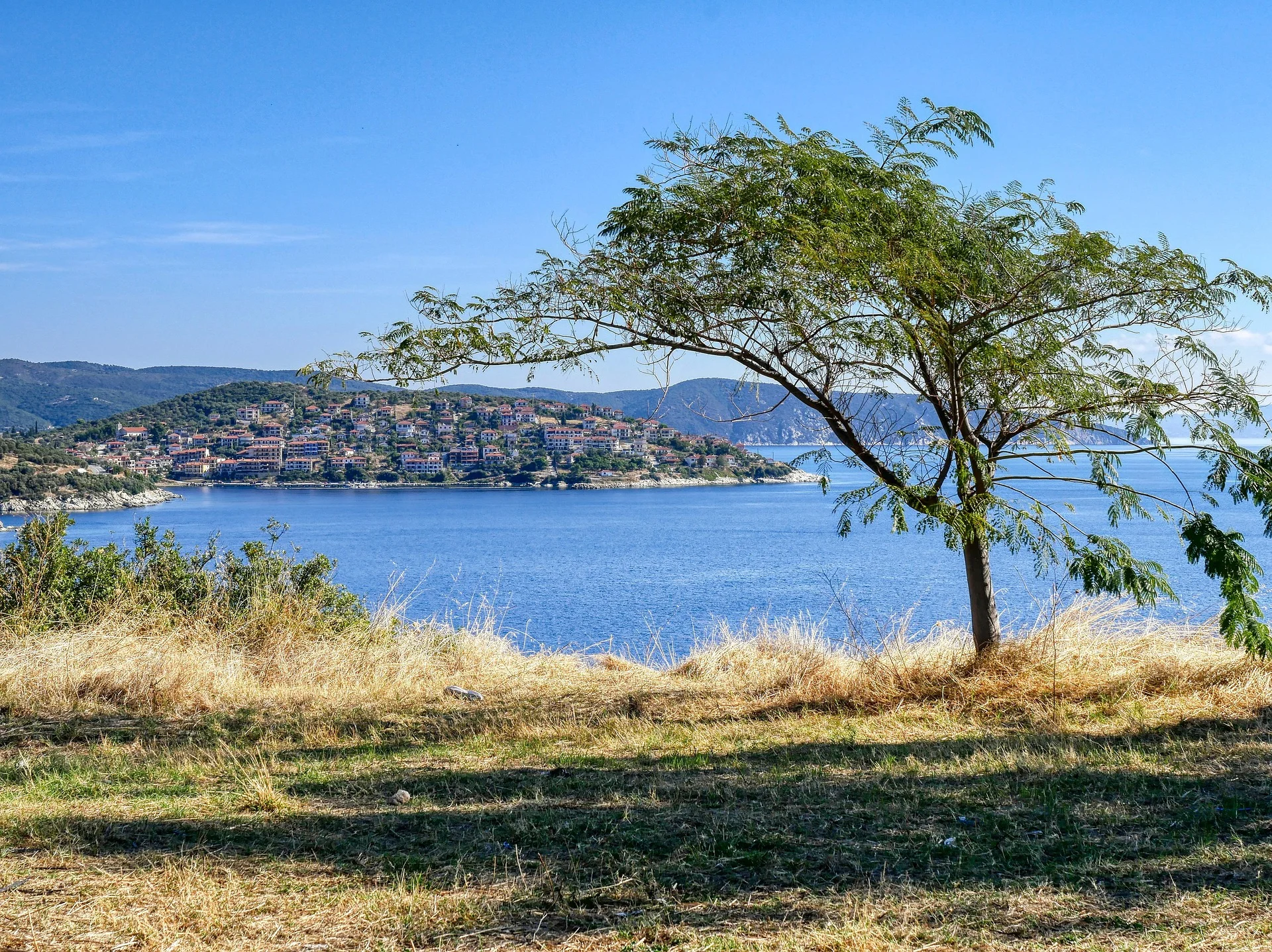
When thinking about owning a home in Greece, many people immediately picture the islands. However, one region on the mainland is increasingly stealing the show: Halkidiki. With its characteristic shape—the three "fingers" of Kassandra, Sithonia, and Athos—the peninsula offers a perfect combination of excellent accessibility and untouched nature. When you buy property in Halkidiki, you are investing in one of Southern Europe's most dynamic and value-stable holiday regions.
Why are so many buyers from German-speaking countries flocking to Northern Greece in 2026, and how does the market differ across the three peninsulas? A comprehensive overview of nature, regions, and current prices.
The Three "Fingers": A Comparison of Nature and Surroundings
Halkidiki is famous for its diversity. The geography divides the peninsula into three completely different micro-markets, giving buyers the opportunity to choose the environment that perfectly suits their lifestyle:
- Kassandra (The Lively Finger): The westernmost finger is the most developed for tourism. Here you will find luxury resorts, beach bars, marinas, and a vibrant nightlife. Perfect for investors looking for high occupancy rates in holiday rentals.
- Sithonia (The Untouched Nature Paradise): The middle finger captivates with dense pine forests that reach down to secluded sandy beaches. Sithonia is quieter, more exclusive, and sought after by buyers looking for maximum privacy, hidden coves, and authentic Greek charm.
- Athos (The Spiritual Border): The easternmost finger is dominated by the autonomous monastic state. Property purchases are only possible in the northern, secular part (around Ouranoupoli and Olympiada). It is a retreat for those seeking peace and culture lovers.
Why Buying Property in Halkidiki is Worthwhile in 2026: A Market on the Strategic Rise
The Greek real estate market has undergone an impressive transformation in recent years. While luxury hotspots like Mykonos or urban Athens dominate the international spotlight, Halkidiki in 2026 has quietly become the top choice for smart investors and discerning private buyers from the DACH region. There are solid, strategic reasons for this that go far beyond mere holiday flair. Those looking to buy a Halkidiki property currently benefit from a perfect interplay of logistical independence, stable returns, and an unbeatable property lifecycle.
1. Logistical Independence: Year-Round Accessibility Instead of Seasonal Isolation
One of the biggest risks when buying island property is often only realized after the notary appointment: seasonal dependency. Many Greek islands fall into a deep winter sleep from November onwards—flights are canceled, ferry connections are reduced, and local infrastructure closes almost completely. Halkidiki, however, completely breaks this pattern.
Due to its immediate geographical proximity to Greece's second-largest metropolis, Thessaloniki, and its international airport (SKG), Halkidiki is seamlessly connected to Central Europe all year round. Thessaloniki Airport is served directly by numerous airports in German-speaking countries even in winter. From the terminal to your front door on Kassandra or Sithonia, it usually takes only 45 to 60 minutes by car on well-maintained roads. This uncomplicated accessibility makes Halkidiki a top destination for the modern "workation" model (working where others vacation) as well as for flexible personal use at any time of the year.
2. The Price Segment: More Square Meters and Quality of Life for Your Money
The Aegean market is undoubtedly beautiful, but in absolute premium locations, prices have reached levels that artificially suppress rental yields. Those searching in the Cyclades in 2026 often pay exorbitant premiums for the prestigious name. Halkidiki offers a significantly healthier price-performance ratio here.
For the budget that would only get you a compact apartment in the second or third row on Paros or Mykonos, you can often secure a detached natural stone villa in Halkidiki with a private pool, large plot, and unobstructed sea views. The entry barriers are noticeably more moderate, while the potential for appreciation—driven by the steady expansion of local luxury infrastructure such as exclusive marinas and golf courses—remains at a very stable level of a projected 5% to 6% per year.
3. The "Double-Income" Rental Strategy: High Yields Through an Extended Season
For investors who not only want to use their property themselves but also establish it as an income-generating asset on the holiday rental market (such as Airbnb or Booking.com), the length of the season is the decisive criterion. Halkidiki benefits here from two massive guest groups:
- International Air Tourism: From May to October, sun-seeking holidaymakers from Western and Northern Europe flock to the peninsula, attracted by the most "Blue Flags" (an award for the cleanest beaches and water quality) in all of Greece.
- Regional Weekend Tourism: The wealthy middle class of Thessaloniki uses Halkidiki as their personal "bathtub." For owners, this means: even in shoulder months like April, October, or early November, when international tourism wanes, properties can be excellently rented out to locals over extended weekends. Well-managed villas in the first or second sea line easily achieve gross yields between 6% and 9%.
4. Sustainability and Strict Building Laws
An invaluable advantage for the long-term value retention of your property is the strict Greek building law in coastal regions. Mass tourism in the form of faceless concrete blocks, as known from some regions in Spain or Turkey, is strictly regulated by law in Halkidiki. Especially on the green finger of Sithonia, great care is taken to ensure that new buildings blend harmoniously into nature and do not exceed maximum height limits. This artificial scarcity of prime plots is the best insurance that your property will remain a sought-after and exclusive asset in ten or twenty years.
- Lower Entry Barriers for the Golden Visa: While the minimum investment for the European residency program on popular islands is €800,000 in 2026, properties can still be found in parts of Halkidiki (depending on the administrative classification of the municipality) within the €400,000 limit.
- Longer Personal Use: Due to the milder climate in the north and the excellent connectivity, many owners use their properties not only in midsummer but also in spring and late autumn for "workation" or as a second home in retirement.
Property Prices in Halkidiki (Market Data 2026)
Prices vary greatly depending on proximity to the sea and the chosen peninsula. In general, Sithonia is considered the more expensive and exclusive area due to the limited supply of new builds, while Kassandra offers a wide range from affordable apartments to high-end villas.
| Region / Location | Typical Property Type | Average Price per m² (2026) |
|---|---|---|
| Sithonia (Premium) | Detached beach villa, large garden | €3,800 - €5,500+ |
| Sithonia (Village Locations) | Traditional stone houses / maisonettes | €2,400 - €3,200 |
| Kassandra (First Sea Line) | Modern luxury villas & penthouses | €3,500 - €4,800 |
| Kassandra (Village Locations) | Holiday apartments & townhouses | €1,800 - €2,600 |
| Athos (Secular Part) | Houses with sea view near Ouranoupoli | €2,000 - €2,900 |
| Halkidiki Inland | Rustic country houses / olive groves | €1,200 - €1,700 |
Investing Where the Emerald Sea Meets Pines
Those who want to buy a Halkidiki property are choosing a crisis-proof investment with a high quality of life. The combination of easy accessibility by car or plane, more moderate square meter prices compared to the Cyclades, and the unique nature makes the peninsula one of the top real estate markets in 2026.
Whether as a high-yield holiday property on Kassandra or as a private refuge in green Sithonia—Halkidiki perfectly captures the true Greek dream.
Buying Property in Greece for EU Citizens: Uncomplicated, Secure, and Legally Equal
European integration makes it possible: For citizens of an EU member state (such as Germany, Austria, or Luxembourg), buying property in Greece is legally extremely straightforward. Since the removal of old restrictions, every EU citizen enjoys full equality with Greek citizens when purchasing real estate. This means: You can acquire unrestricted ownership of land, houses, or apartments—whether as a private holiday home, a permanent retirement residence, or as an investment property for rental.
However, there are some country-specific peculiarities and bureaucratic steps you should be aware of to ensure that the purchase of your dream property in the Aegean or in Halkidiki is absolutely legally secure and smooth.
The Process in 5 Clear Steps
Buying property in Greece in 2026 is becoming increasingly faster due to digital government platforms, but still requires cooperation with local experts. The typical process is divided into the following phases:
- 1. Applying for a Greek Tax Number (AFM): This is the very first and most important step. Without the so-called Arithmos Forologikou Mitroou (AFM), you cannot sign a purchase contract or open a bank account in Greece. The application is easily handled at the responsible tax office (DOY)—also via power of attorney through your lawyer.
- 2. Opening a Greek Bank Account: Although payments can theoretically be made from foreign accounts, practice and tax transparency usually require a local account. This will later also be used to handle utility costs (electricity, water) and any rental income.
- 3. Legal Due Diligence (The Most Important Protection): Your appointed lawyer checks the property at the local Land Registry (Hypothekovylakeio) or the modern Cadastral Office (Ktimatologio). This meticulously examines whether the seller is the rightful owner, whether there are any liens or mortgages on the property, and whether all building parts were constructed legally and in accordance with current building laws.
- 4. Property Transfer Tax & The Preliminary Contract: Before the main contract, the property transfer tax (currently moderate at approx. 3%) is paid to the tax office. Often, a private preliminary contract is also signed and a deposit (usually 10%) is paid to legally reserve the property for you.
- 5. Notarization & Land Registry Entry: The final purchase contract is drawn up before a Greek notary and signed by both parties (or their authorized representatives). Only with the subsequent registration of the contract in the Land Registry does ownership officially and legally pass to you.
The "Security Trio": Why You Should Never Buy Without Experts
Even though the purchase is legally open to EU citizens, the Greek system differs in details from the DACH region. A secure purchase is always based on three pillars:
An **independent lawyer** represents exclusively your interests and is liable for the clean title check. A **civil engineer** checks the building legality of the property, as every property in Greece requires a digital "legality certificate" before sale. The **notary** acts as a neutral state authority, finalizes the contract, and monitors the correct execution.
Conclusion for EU Buyers
If you as an EU citizen want to buy a property in Greece, all doors are open to you. European law protects your property to the same extent as that of the locals. With solid preparation and the right expert network on site, the dream of your own villa on the Mediterranean becomes a secure and future-proof investment.