Balcony solar systems: advantages, new laws and implementation in simple steps
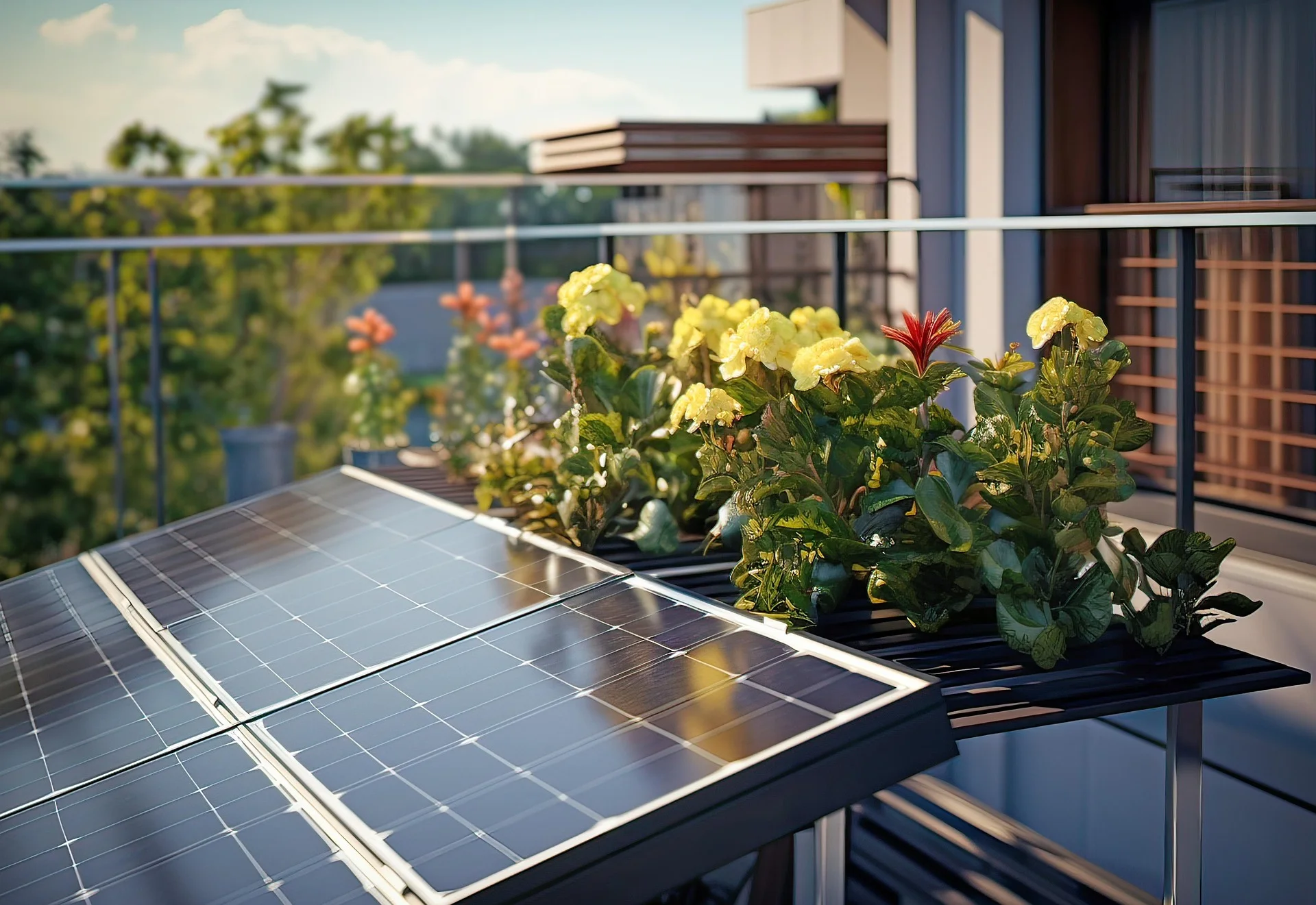
Balcony solar power systems will become increasingly attractive in 2026: Higher output, simplified regulations, and falling costs make mini solar systems a worthwhile investment for many households. Whether you’re a renter or a homeowner, with a plug-and-play solar system, virtually anyone can generate their own electricity today and save on energy costs in the long run.
Current trend: Balcony power plants on the rise
Demand for balcony solar systems is growing rapidly. According to the Federal Network Agency, over 1.2 million balcony power plants are already in operation in Germany. More and more people are turning to self-generation to become less dependent on rising energy prices.
Higher output thanks to new regulations
One of the most important changes concerns the output of the systems:
The current DIN V 0126-95 now allows:
- Up to 960 watts of module power
- Use of Schuko plugs (standard household outlets)
- Simplified installation without major technical effort
This means: Higher electricity yield combined with easier use—ideal for balconies, terraces, or small spaces.
Costs, Performance, and Cost-Effectiveness
Balcony power plants have become significantly more affordable and offer good value for money:
- Cost: approx. €400 to €1,200 depending on power output and quality
- Electricity production: up to 800–1,000 kWh per year possible
- Savings: several hundred euros annually, depending on consumption
This means that many systems pay for themselves in just a few years.
Important tips before buying
Before purchasing a balcony power plant, you should consider the following points:
- Balcony orientation (ideally: south or southwest)
- Avoid shading (e.g., from buildings or trees)
- Check the meter (modern electricity meters are often a requirement)
- Registration in the market master data registry
- Quality of the modules and inverters
How does a balcony power plant work?
The idea behind a balcony power plant is actually quite simple: install solar modules, plug them in, and start saving electricity right away. That’s exactly what makes these small solar systems so popular.
Thanks to their compact size and ease of use, even people without their own home can easily use a balcony power plant. The modules can be mounted, for example, on the balcony railing, on the house wall, on the terrace, or even on the roof.
Typically, a balcony power plant consists of one or two solar modules with an output of about 400 to 500 watts, as well as an inverter. This inverter is a key component: it ensures that the solar power generated is converted into standard household electricity.
Once the system is connected, the electricity is simply fed into your home’s electrical grid via an outlet. The big advantage: You automatically use the electricity you generate first. This means less energy needs to be drawn from the public grid—and your electricity meter runs slower.
How many watts can a balcony power plant have in 2026?
The output of balcony power plants has increased significantly in recent years, making them even more attractive for households. Since May 2024, up to 800 watts may be fed directly into the home’s electrical grid in Germany—previously, the limit was 600 watts.
Additionally, the total installed capacity of the solar modules may not exceed 2,000 watts (2 kWp) per household or electricity meter. That’s why there are now larger balcony power plants with multiple modules that can still deliver good yields even with less sunlight—such as in winter.
If a system produces more than 800 watts, the inverter automatically ensures that only the permitted amount of power is fed into the home’s electrical grid. The electricity generated is always used first within the household. Only when this is insufficient is electricity drawn from the public grid.
Another advantage: According to experts, a well-oriented balcony power plant can save about 10 to 20% of annual electricity costs.
New technical regulations provide additional safety. The Association for Electrical, Electronic, and Information Technologies has updated its guidelines, further simplifying the process. The current standard DIN VDE V 0126-95 sets out the key requirements for plug-and-play solar systems without battery storage and establishes clear guidelines for consumers.
How do you install a mini solar system?
Installing a mini solar system is easier than many people think. In most cases, you can even install a balcony power plant yourself—without any major technical effort.
The right location is crucial
Whether the system is truly worthwhile depends heavily on its orientation. An angle of about 30 to 40 degrees and a south-facing orientation are optimal. However, modules facing east or west can also deliver good results—even at a steeper angle, such as on a balcony railing. Above all, it is important that as little shade as possible falls on the modules, as this can significantly reduce output.
Flexible installation – not just on the balcony
A balcony power plant can be installed in many locations:
- on the balcony railing
- on the building facade
- on the patio
- on the garage or garden shed roof
Modern regulations are now much more lenient. Nevertheless, you should ensure that the installation site is stable—since traditional glass modules often weigh between 20 and 25 kilograms.
Easy connection
After installation, the system is simply plugged into an outlet. If there is no outdoor outlet on the balcony, there are practical solutions: Some manufacturers offer flat cables that can be easily routed through window or door frames. It is important that the cable is not damaged—for example, by frequent opening and closing.
In the long term, however, it makes sense to have an outdoor outlet installed by an electrician.
Maintenance and Lifespan
A major advantage of mini solar systems: they are virtually maintenance-free. It is sufficient to clean the modules about once a year to ensure they maintain their full performance.
With proper care, solar panels can last 20 to 30 years. Inverters typically have a lifespan of 10 to 15 years.
Balcony solar system with or without storage – which is the better choice?
Anyone deciding on a balcony solar system often faces the question: Is a battery storage system worth it, or is the classic solution without a battery sufficient? The answer depends primarily on your own electricity consumption and individual goals.
Balcony solar system without storage – simple and affordable
Most balcony solar systems operate without storage. The electricity generated is used directly in the household—for example, for the refrigerator, router, or washing machine.
Advantages:
- More affordable to purchase
- Easy installation (“plug and play”)
- Quick payback
- Hardly any maintenance required
Disadvantage:
Electricity that isn’t used immediately is lost or fed into the grid without you benefiting directly from it.
This option is particularly suitable if you are home during the day and can use your electricity directly.
Balcony solar system with storage – greater independence
With a battery storage system, you can store excess energy and use it later—for example, in the evening or at night.
Advantages:
- Higher self-consumption of the electricity generated
- Greater independence from the electricity provider
- Electricity also available in the evening
Disadvantages:
- Higher upfront costs
- Longer payback period
- Additional space required for the storage unit
This solution is ideal if you use little electricity during the day but need a lot of energy in the evening.
When is a storage system really worth it?
A storage system can be a good idea if:
- your electricity consumption is mainly in the evening or at night
- you want to be as self-sufficient as possible
- you want to offset rising electricity prices in the long term
On the other hand, you’re often better off without a storage system if:
- you use a lot of electricity directly during the day
- you’re looking for an affordable entry-level solution
- you want to save money quickly
With or without storage?
For most households, a balcony solar system without storage is the best way to get started, as it is affordable, simple, and efficient. Storage is particularly worthwhile for users who want to maximize their self-consumption and become more independent.